Thoughts on mercy, humanity, vulnerability, and beauty
I like to write. I don’t know if I’m any good. I like ee cummings, Beyoncé, John Keats, and Shakespeare. I think life is better than death, but perhaps I’m biased.
You know that scene in It’s A Wonderful Life where Mr. Potter tries to take everything away from George Bailey? And do you remember the next part where the entire town rallies around him and raises the money he’s missing, because they know that he will always, always be on their team? Over the past four days, I have been living just such a scenario. I am neither George Bailey. Nor (thankfully), am I Mr. Potter. I am Mr. Gower, Violet, Sam Wainwright.
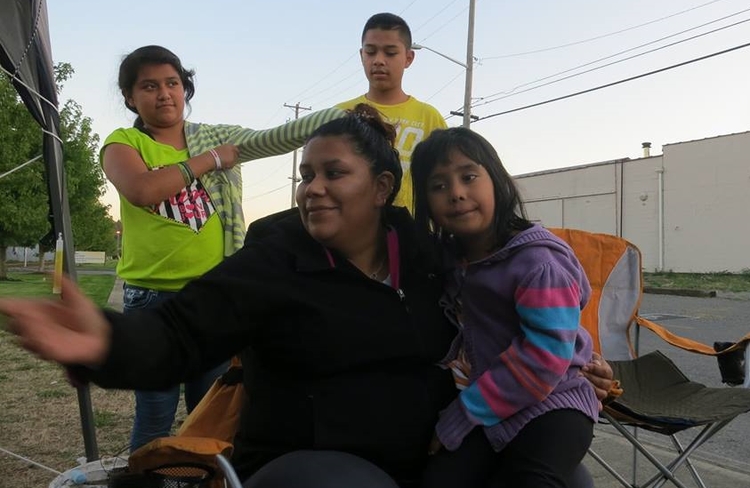
Veronica Noriega is an irreplaceable part of our greater Seattle community. She has sacrificed a great deal to be here, and she has consistently done so with extraordinary generosity and strength. For the last 18 months, Veronica’s husband Ramon has been in immigrant detention in Tacoma (In case you didn’t know, Tacoma is home to one of the country’s largest detention centers, privately run by the GEO Group). During her husband’s detention, Veronica has organized and lead solidarity events outside of the center and worked three jobs, all while being a mother to three children.
None of these things matter to her bank or to her landlord. Today, Veronica and her children are on the verge of homelessness.
Veronica with her children: Jose, Veronica, and Ashley
I want you to understand why Veronica is so much like George Bailey. I want you to understand that, like George, Veronica loves her family. Like George, she loves her community, her neighbors. Like George, she has dreams and aspirations that have been put on hold over and over again, in service of those around her. Like George, she needs her community’s help.
This is not a story that will end with Veronica running through the streets of Seattle shouting “Merry Christmas, you old Building and Loan!” It won’t have a white, male protagonist, perfectly timed music, or an adorable angel named Clarence. But none of that is what matters. What matters is that we choose to give Veronica the same kind of love that we give a fictional character from a fictional town.
—
Last week, I went on a date. As we sat talking about things far too cerebral for just about anyone’s taste but our own, my date leaned in and whispered, “You know that romanticized notion of the 1920s drug store, where the kids know the guy behind the counter?”
“Yes,” I said. “It’s a Wonderful Life; Mr. Gower!”
“I want that back,” he whispered.
I want that back too, but I don’t want it just for the few people who had it in the first place. I want it for everyone. I want it for Veronica Noriega. I want it for her husband Ramon and for her children. I want the lawyers and the landlord and bank who think she is unloved and alone to know, beyond all doubt, that she is loved and she belongs here.
So I am inviting you to participate in a story of high ideals realized, of love winning. I’m asking you to improve upon a Frank Capra classic where the color of your skin and the language you speak do not determine whether you can be the hero of the story.
—
Veronica needs $8000 by July 1st in order to own her home and pay her legal fees. What’s more, over the course of one year, she will pay that money back to the organization that is raising funds for her, so that the money can go into a revolving fund for people in similar situations. Any money raised in addition to what Veronica needs will go immediately into that fund.
More of Veronica’s story can be found here, along with a giving page.
I don’t know. I just did. When you see people up close, all the lines and details and flaws, they become a dance or a song or whatever the most beautiful thing in the universe is. And you never want to look away; you can’t, in case you miss something of immeasurable importance. You can’t really say it was my fault—loving him—but I’d still take all the blame. It’s like that time I saw the Northern Lights —I just stared at the sky for hours in the cold, even though my neck started to hurt. There wasn’t a why. I had to because he was too beautiful. Even at his worst, I only wanted to forgive him as soon as I could.
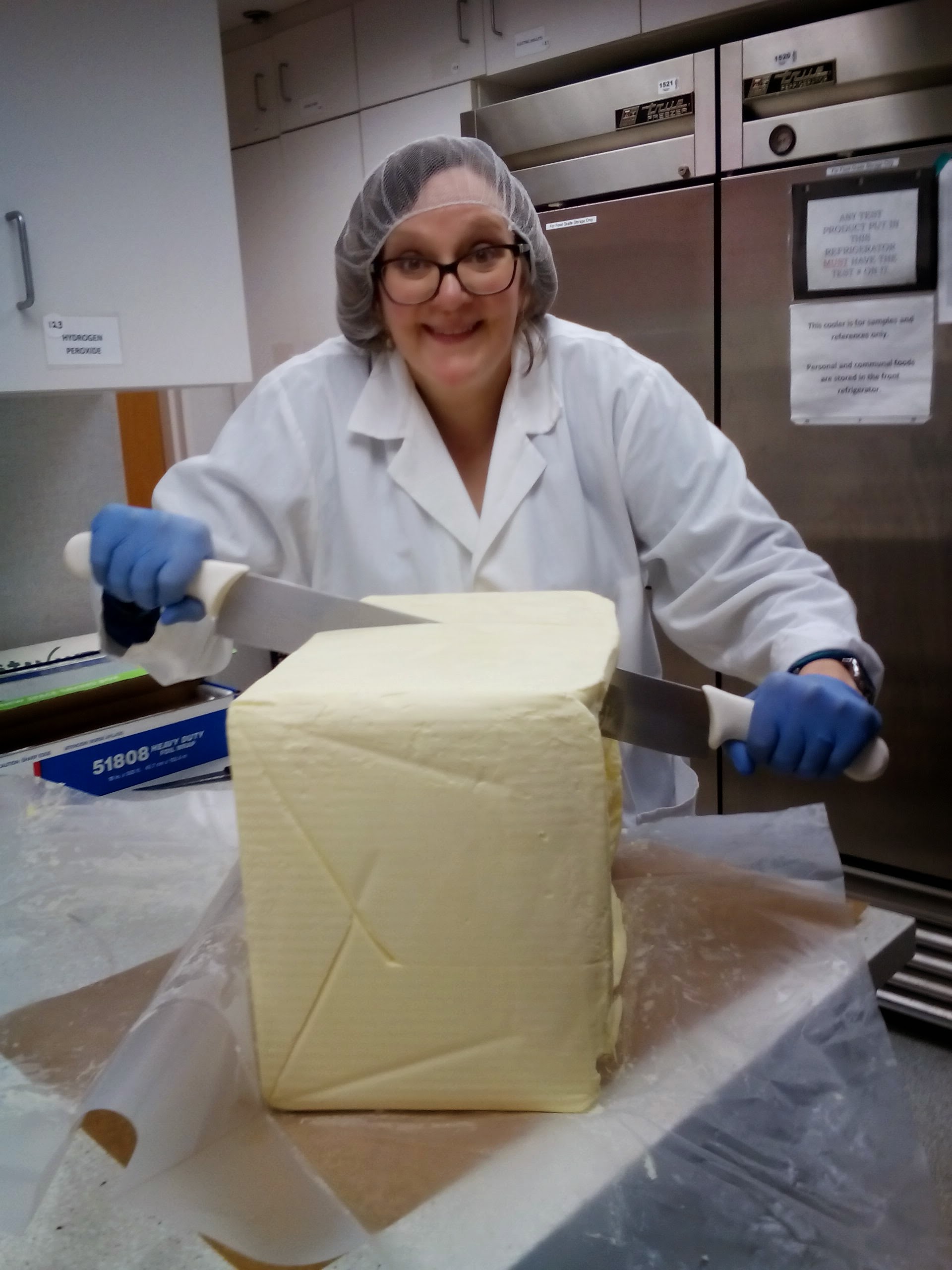
From potty training M&M parties to first bra celebrations, my mom knows how to take the most ordinary things in life and turn them into a party. She really was so excited about my first bra that she wanted to tell our barista when we went for a celebratory coffee afterwards. Even cutting and weighing 45 pounds of butter was so much fun, it might as well have been a party.
2. Be Silly Sometimes
Some people don’t know this, but I was a very serious child. I took everything personally, and used my empathizing skills to focus on the injustices of the world. This meant I cared a great deal about people and, well, everything, but I wasn’t having very much fun.
Then, my dad told me a story about why he fell in love with my mom. He said it was because she was so much fun, that she turned walking across campus into a spy game of ducking behind trees; she knew how to be goofy. This story triggered a transformation in how I viewed the world. I suddenly felt that I had license to have fun, and have spent my adult life perfecting the art of it. And yes, sometimes you do have to laugh so hard you pee your pants.
Photo Credit: Noah Burkitt
3. An appreciation for Free Things on the Side of the Road
I grew up going to thrift stores, as did a lot of people. However, not everyone grew up stopping at every garage sale and “free” sign we saw as we drove down the street. A significant number of couches we have had in our house were adeptly discovered by my mother’s innate junk-o-meter. Call it a sixth sense. The great thing is that it wasn’t actually junk; it was usually pretty nice. Of course, with six children in the house, it didn’t stay nice for long, so it was just as well that we got it for free. This skill is especially useful while in college, just so you know.
4. Morning Singing
There were two ways my mom would wake us up in the morning. One was calling our names up the stairs at the ungodly hour of still-dark-outside o’clock when it was time to get ready for school. The other was after she’d make pancakes and sausage or our absolute favorite: popovers. The sun would be shining, and my mom would start singing “Oh What a Beautiful Morning” from Oklahoma! There is no better way to be woken up in the world.
5. How to find things in cupboards
A typical conversation with my mom:
“Mom, where is the cinnamon?”
“With the spices, on the second shelf of the cupboard, in the kitchen.”
“I can’t find it.”
My mom would stop what she was doing, walk to the cupboard in question, assume a power stance, close her eyes, furrow her brow, and call out in an authoritative tone, “Cinnamon! Come forth!” Opening her eyes, she would reach into the cupboard, pull out the cinnamon and hand it to me. She has a 100% success rate.
It is for precisely this reason that I do not accidentally buy duplicates of things like spices, over-the-counter medications, and Band-Aids. I do believe the Finding Things in Cupboards is a genetic predisposition.
5.5 Being Xena the Warrior Princess
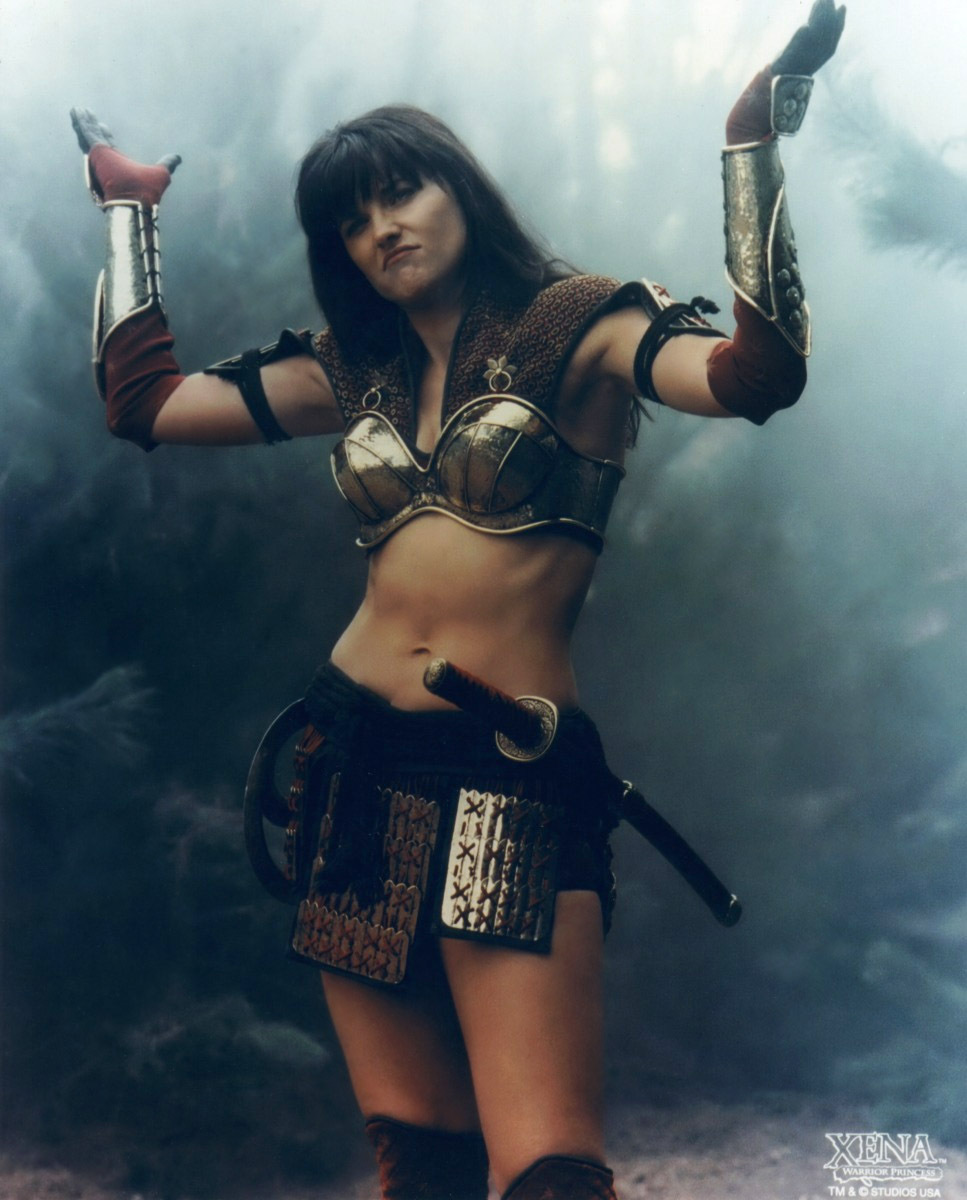
In case you hadn’t heard, my mom is Xena (No, not Lucy Lawless). She can shut sticky minivan doors, find anything in a cupboard, paint and stencil our front porch while pregnant, take care of her entire family while ill, clean the house until it’s spotless, and fight off ALL the bad guys.
Actually, being Xena is more like a life goal than it is something I feel I have accomplished. I’m not nearly as good at these things as my mom is.
6. Don’t be Friends with Boys
I’m going to be really honest, I haven’t learned this one. My mom does not give direct advice on most subjects, but this has been one she has freely instructed me in since puberty. It just hasn’t sunk in. Sorry, mom.
7. How to go to Weddings, Attend Funerals, Hold Newborn Babies, and Visit People in the Hospital
I know that these may seem somewhat unrelated, but a lot people reach their adult lives never having done any of these. I had friends in college trying to plan their weddings without ever having attended one. When a family member dies, very little prepares you for the grief, but if you’ve been to the funerals of acquaintances as a child, you have the basic framework for what to expect from the actual proceedings. Newborn babies are not like any other kind of living creature you will ever come across. They are tiny, fragile, and floppy. They are basically aliens. For this reason, they are often a source of anxiety when one is not trained in handling them. Visiting people in the hospital is usually awkward because we aren’t taught how to be around people who are in pain.
My mom is wise, and she made sure we went to the weddings we were invited to, went to the funerals for people we knew, and visited all her friends in the hospital—whether they were sick or just gave birth.
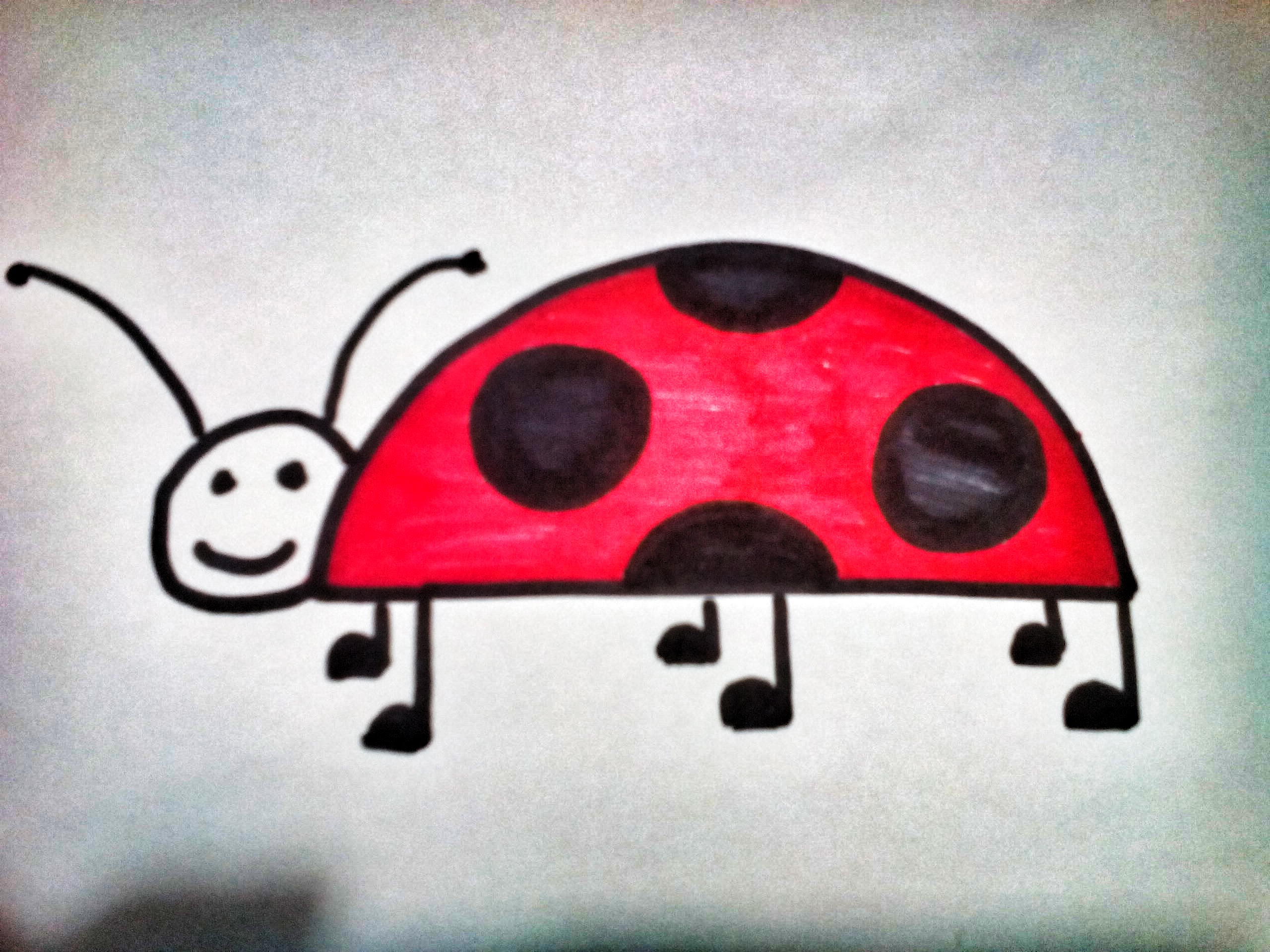
8. How to Draw Ladybugs
As an inarticulate child, I would bring my mom a marker and some paper and ask, “Mom, willyoudrawmealadybug?” I’m not sure how she managed to understand this jumble of syllables, but she would sit and draw ladybugs for me. Now, I draw pretty stellar ones too.
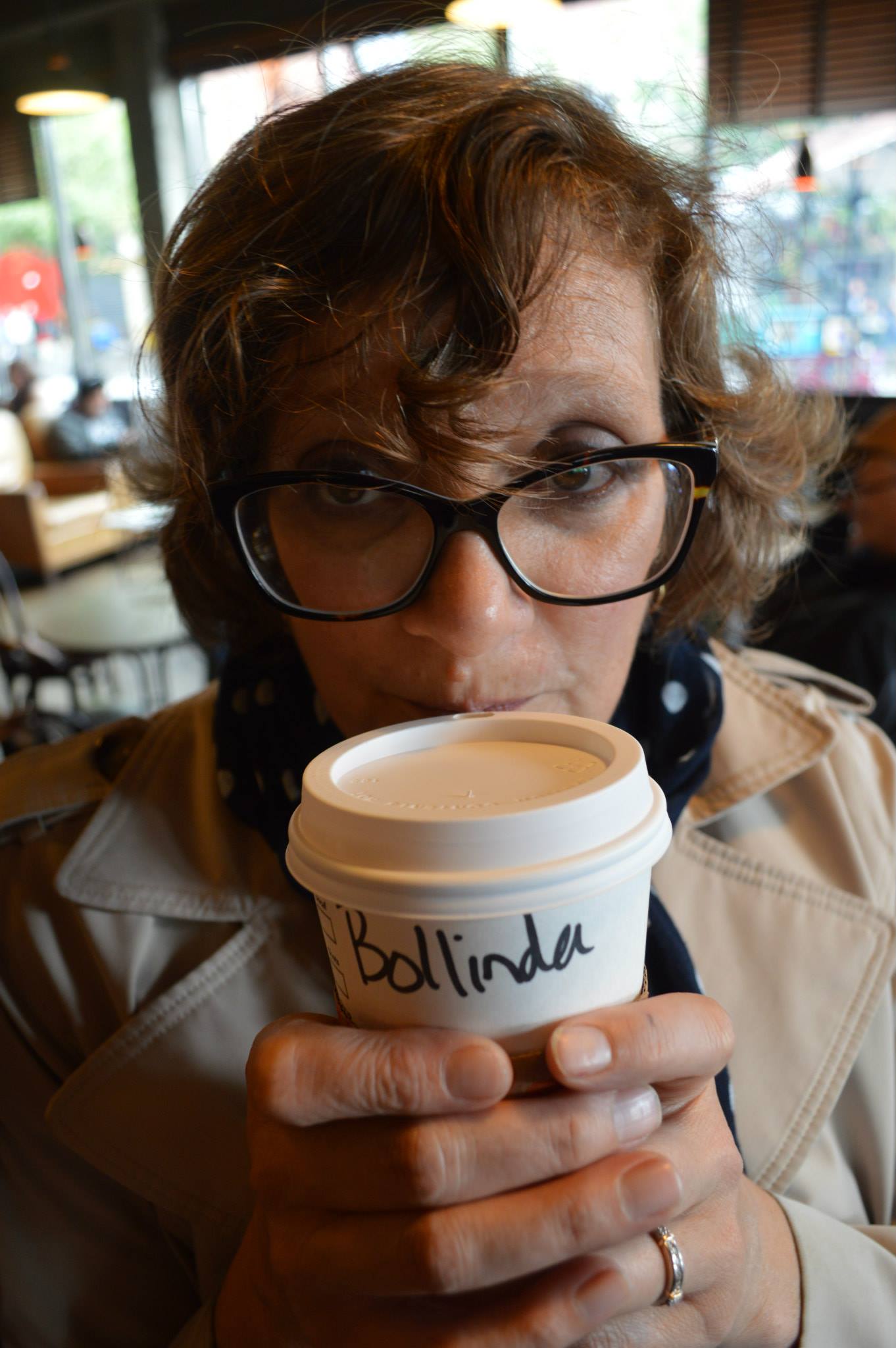
9. Coffee
I drink coffee. I wouldn’t say I drink a ton of it, like maybe one cup per day (which is teaspoons in Seattle standards). However, I do enjoy it a great deal. I started in on coffee when I was two. As the story goes, I would sit in my highchair, pound my fists, and yell, “Mommy! Coffee!”
I would like to thank my mother for enabling me from such a young age.
Photo Credit: Noah Burkitt
—
I imagine that once my mother has finished reading this, she will be weeping unapologetically. Over the years, I have had the chance to compare her to the other mothers I have had. I can say without question that she is the best mother of them all.
I think you robbed me of your summertime self, where we could—instead of huddling in the cold, your gloveless hands inside my coat, curiously poking fingers through the holes in my dress— feel the rejuvenating heat and bless the sailboats or rest on hilltops watching water turn from its textured blue-gray into flaming magenta to match the sky, putting on a spectacular kind of drag show.
For me, sunshine felt like a trick, instead of a promise, so that I even resented the cherry blossoms.
I never got to sit with you when the earth was warm,
and the air had cooled into after-sunset molecular legato.
My hair was never put into braids, off my neck,
and we never got to touch
until we were both covered in the kind
of sticky sweat that only summer bodies know, and only cold showers can properly remedy.
I find myself trying to be both of us, the practical romantic, with plans and fears and deep loves in tension with each other, in compliment to one another—
instead of offering just me
ceaselessly to all of you— and I keep my heart alive,
that palpitating, romanticizing idealist thing, with my memory’s best guess of you.
When I speak to you again,
I discover how bad I am at being you.
“I’m doing… (I don’t think I can answer that question right now. I could lie and tell you I’m doing well in a cheerful tone and my kindest, bravest smile. I could stick with the “pretty good” that I learned from my dad, with all its ambiguity. If I told you I was doing well, it wouldn’t completely be a lie. There are so many things I find to be thankful for, things that help me fully embrace being and becoming.
And yet.
My mornings begin so painfully, with an aching consciousness and the sense that my insides are being slowly shredded into mulch. I miss you, my lover, one of my best friends—the kind that makes me a better person. I miss your body next to mine, even if we aren’t touching; your presence fills an entire room. I miss your voice, the promise of adventure, my deep, deep sense of belonging. I rarely feel like I belong, but I did with you, and that absence is felt at almost every moment, even as I meet men who flirt in the office or at parties, even when I’m laughing at the formation of a new inside joke, even as I dare greatly; I know the daring would be sweeter with you by my side. But you don’t love me. You don’t want to love me, I guess, and this is my ache. This is why I have been sorrow’s companion.
And in this multifaceted, complex, dualistic state of being, I wish to say, “I understand.” I come up with reasons why it would have been broken one way or another. I tell myself your shoes are stupid and your jeans unflattering. I try to convince myself again that your chin is too small and that you slouch too much. I whisper that you’d never give up anything for me or be able to support my dreams, because you don’t understand them. I tell myself you’d rather be comfortable than love.
But these are mere topical ointments. They are not heartbalms. They help me believe less in your glorious, stumbling, faltering, redeemed humanity. They allow me to flatten you into the paper-doll version, where your actions are the puppets of my own pain.
In all of this, I know that I am already alive. I will keep being already alive, keep writing, keep learning, keep crying, keep smiling, keep singing. I will find belonging in the stars and the moon. I will learn that my heart has many rooms, and there is space enough in it for grief and for joy, space enough for every one of life’s adventures, space enough to fall in love again without souring my other loves, space enough for eternity where we will always have life, life more abundantly.)…pretty good.”
There’s a song in a musical about how you have to have elegance in order to fit in at fancy restaurants; I never could understand the lyrics. Today, especially where I reside in the Pacific Northwest, elegance is considered bourgeois—and the word bourgeois is even too bourgeois.
Once, during a philosophy discussion, I claimed that I like social rules. They put the world in order and have an elegance to them. My professor said that the real reason I like such things as having multiple forks and knowing where to put my napkin and when is because I like to be distinctive. He didn’t go so far as to call me a snob, but that’s what he was insinuating.
I am not a snob, but I do love elegance. I love flowing fabrics, crystal goblets, pearls, and caviar. My favorite designers are Alphonse Mucha, Erté, and Paul Poiret. If I could put feather accents on the shoulder of every dress and have huge, batwing sleeves on all my coats, I would. Velvet. Silk. Lace. They thrill me.
Of course, I’m a practical person in many ways, so my wardrobe is considerably plainer than any of the prints Erté ever produced. I’ve never worn a turban with a single feather jutting into the heavens. I own no silk bathrobes.
I do, however, own a pair of white, silk palazzo pants; two vintage coats with fur collars; a backless, black velvet, floor-length dress; and a pair of yellow suede heels. This finery could easily lead people to believe that I am completely obsessed with my appearance and have no bearing on the normal world, giving rise to frivolity.
On the contrary, I am not obsessed with my appearance. I care very little for it. That is what makes it so easy to change it. I do care about fun, and it is fun to wear a gigantic, floppy hat out to dinner. It’s fun to shave your head and wear dreamcatchers for earrings. It’s fun when your boyfriend can’t keep his hands off you in your satin jumpsuit despite being so skeptical about it on the hanger. I can be a Greek goddess or Edith Piaf or a ’30s film star just by putting on an outfit or doing my hair a little differently. And then I can go right back to being your typical Seattlite in riding boots, leggings, and a sweater.
However, I would like to state unequivocally that these things are, indeed, frivolous. They are not, however, a frivolity that I intend to take seriously, ever. The real problem of frivolity is when it is taken too seriously. That is how a good time turns into snobbery. And snobbery is merely upper class exclusivism. The rules create order, but being flexible enough to eat a corn dog while wearing elbow-length suede gloves also has its merits. A generous spirit is essential, and you simply must have absolutely as much fun as possible. Elegance and dignity are not the same thing, after all.
There were four words that were important to me, when I woke up much too early this morning. They are usually important, but sometimes, I ignore important because of pain or distraction or the uncomfortableness of my reality.
Their faces rest in my bedroom and oversee the ebb and flow of messy and tidy (although, lately, there has been an abundance of messy). Theirs is a tragic story that gives me everything they lost, years ago, before any of this could be considered comfortable. They lived real lives and suffered real death. They give meaning to my living.
Sophia is a Greek word that means wisdom. This word is special. I remember reading down a list of names, and this one, well, it spoke to me. The word philosophy is derived from sophia: philo-sophia. Love of wisdom. When I saw this name, something in me longed for it, connected to it, connected to her.
She was the mother of three: Faith, Hope, and Love. Wisdom named her daughters after the chief Christian virtues, a reminder that you can’t have one without the other.
Her daughters were tortured and killed because they refused to deny their Christian faith. I don’t know if my ancestors were early Christians. It’s possible. They converted at some point, but I don’t know when. But Wisdom and I are connected now, part of the same tribe. So they were my sisters who suffered and died for their faith, faith that, today, is never a threat to my life.
Wisdom buried her three daughters after their martyrdom. Then, Wisdom died of grief at their graves. Now, she is known as a martyr as well.
This is my ancestor. I am born into her family through a different kind of blood, a different kind of life. And now she is part of the cloud of witnesses. Now, we are called by the same name. It is not in vanity that I seek to be wise. I seek to be like my namesake, my intercessor, and—at times—my comforter. I seek wisdom in faith, hope, and love. You cannot have one without the others.
And when I pray, I know that I am participating in the unnamable truth of community and communion. It is more abstract and more beautiful than all things I have known. I see her face; I know she is beckoning me in, beckoning me to the one on whom her eyes are fixed, the one whose wisdom is perfect, whose love is perfect, the one in whom hope does not disappoint.
He sat alone in the darkened living room, the blank tv glowing. The sun had disappeared while he had watched the movie and aimlessly wandered the threads of the internet. The film, despite its title and promise for action and adventure, with unrivaled style and cinematography, had been a romance, another tale of high ideals, of sweeping gestures, of perfect moments that had lit up his now empty screen.
In the darkness, his consciousness slowly resurfaced, and he found himself comparing his own life to that of the film’s hero; who had somehow found the perfect moment to say the right words. Perfection: was such a thing possible?
He had struggled over perfectionism before—that need for a controlled, pristine environment at all levels. It’s what made him so good at his job, at least when he needed to be. Focus, attention to detail, artistry even, idealism—a better word than perfectionism, even if only marginally, he thought. Yes, these things allowed him the be so creative in his self concept. He could imagine an ideal world, an ideal self, just as the film had done.
But the glow of the tv screen and the quiet of his apartment reminded him that he hadn’t achieved it.
She had been magnificent, beautiful in ways he had never seen in other women—beautiful to her core, even with her makeup stripped and her hair askew. But he had so often sensed the disconnect between the world he had imagined and the one he experienced with her. They had had their moments, the kinds of things that romantic comedies can’t do justice to in their montages. There were just too many things that didn’t go as planned. He couldn’t make the broken pieces fit, and he couldn’t adjust his ideals to fit the pieces he had.
He wanted to. He wanted to wake up in the morning and just make that phone call or drive too fast at an unreasonable hour of the night just to knock decisively on her door and tell her she was the only one for him. He wanted to, but whenever these desires surfaced into anything nearing articulate thought, a tight knot in his stomach seemed to tether him to his seat. His hands would fill with lead, and a lump would form low in his throat causing him to swallow uncomfortably and breathe uneasily.
He did not fear rejection; she had made herself clear on those grounds, unequivocally so. And even though he had calculated the possibility of her changing her mind, it wasn’t the possible image of her slamming the door in his face that held him there, so inert; it was the memory of what had already been. He could still recall the sobs that came from her bedroom as he left her apartment for the last time, unable to allay her grief until he was out of earshot. Her tears: there was a pang just below his rib-cage as he thought of it. They were the sound of his guilt now. He could only remember his own failings.
There was no redemption for him, and there would be no phone call, no rap on the door. He would watch another movie, instead, and doze off against the glow of the tv.
Maybe he would stumble upon a better story soon, one that could be made better, one that didn’t have missing or broken pieces.
As the next film began, his noticeable sense of loneliness faded, and he let his conscious mind get lost in the flickering lights and familiar sounds unfolding some other reality while he slowly drifted to sleep. His dreams were full of doors; in every one he opened, she was there, or at least the shadow of her, always as if to encourage him, maybe you should go for it anyway. As this idea spread itself across his unconscious mind, he noticed that he was floating instead of being weighted down.
I like to sleep naked. This might surprise some people, scandalize others, and allure still others. Maybe I inherited it from my mom, who would try to make breakfast, wearing just one of my dad’s white undershirts, before the rest of us got up. Maybe I learned it from my older sister, who takes nudity on as a personal challenge. I think I’ve seen her breasts more times than I’ve seen my own.
I didn’t always sleep naked. In fact, I was the one in my family who insisted on changing where no one could see me, who never let anyone in the bathroom with me, who would wait to get out of bed in the morning until my sister had already gotten up, so she wouldn’t see me strip down to my underwear.
The first time I slept naked, I was in France. It was the first time in my life that I had my own room. I remember slipping into bed. The covers felt cool and comforting. From then on, I slept naked as often as I could. I struggled with my self image, though. Over the course of about five months, I gained about 20 lbs. I had never considered myself pretty, regardless of my weight. But I learned to enjoy the vulnerability of nakedness, of waking up in the morning and seeing myself in the mirror without any clothes on. No one knew, and I didn’t tell anyone, but I was slowly learning to accept that I am a body as well as a soul.
In January of last year, I moved into a new apartment after sleeping on a friend’s couch for four months (if at all possible, avoid being homeless, but if you must, be sure to find a couch that belongs to people who love you). I didn’t have any private space for four months. The first night I slept at my new place, I made sure to take off all of my clothes before getting into bed. I had a couple of weeks before my roommate moved in so I spent even more time naked, naked dish-washing, naked laundry, naked writing, naked everything. I do draw the line at cooking naked, because you will always regret naked bacon.
Then, something terrible happened. I got dumped. I felt torn in two, heartbroken. I could feel a pressure on my chest as I went about my daily routine, and getting ready for bed started with morose sighs and ended with me crying in the fetal position, clutching my Bible to my chest. But I couldn’t take my clothes off. I didn’t want to be naked. I wanted to be swaddled, safe. I wanted to reject the freedom that comes with letting my body into open space without any edits (even if no one else sees it).
Because, you see, I had learned to be vulnerable, and vulnerability costs something. Sometimes, it costs friendship. Sometimes it costs a job. Sometimes it costs a lover. However, refusing to be vulnerable is more costly. I may be able to avoid all the drawbacks like shame, and heartbreak, and fleeting moments of feeling worthless. Conversely, though, I cannot partake in the joy, peace, wholeness, contentment, connectedness, and love that vulnerability leads me to.
We don’t get to have any of the good things that we risk losing in the first place if we refuse to be vulnerable. And vulnerability, a lot of the time, feels quite a bit like being totally naked.
This is why I have decided to be naked, even though it is hard. I want to be vulnerable, despite a completely turbulent year, especially because it feels scary. Where there is vulnerability, there is beauty. Where there is beauty, there is strength.
In case you are wondering, I did write all of this whilst in a state of total undress.
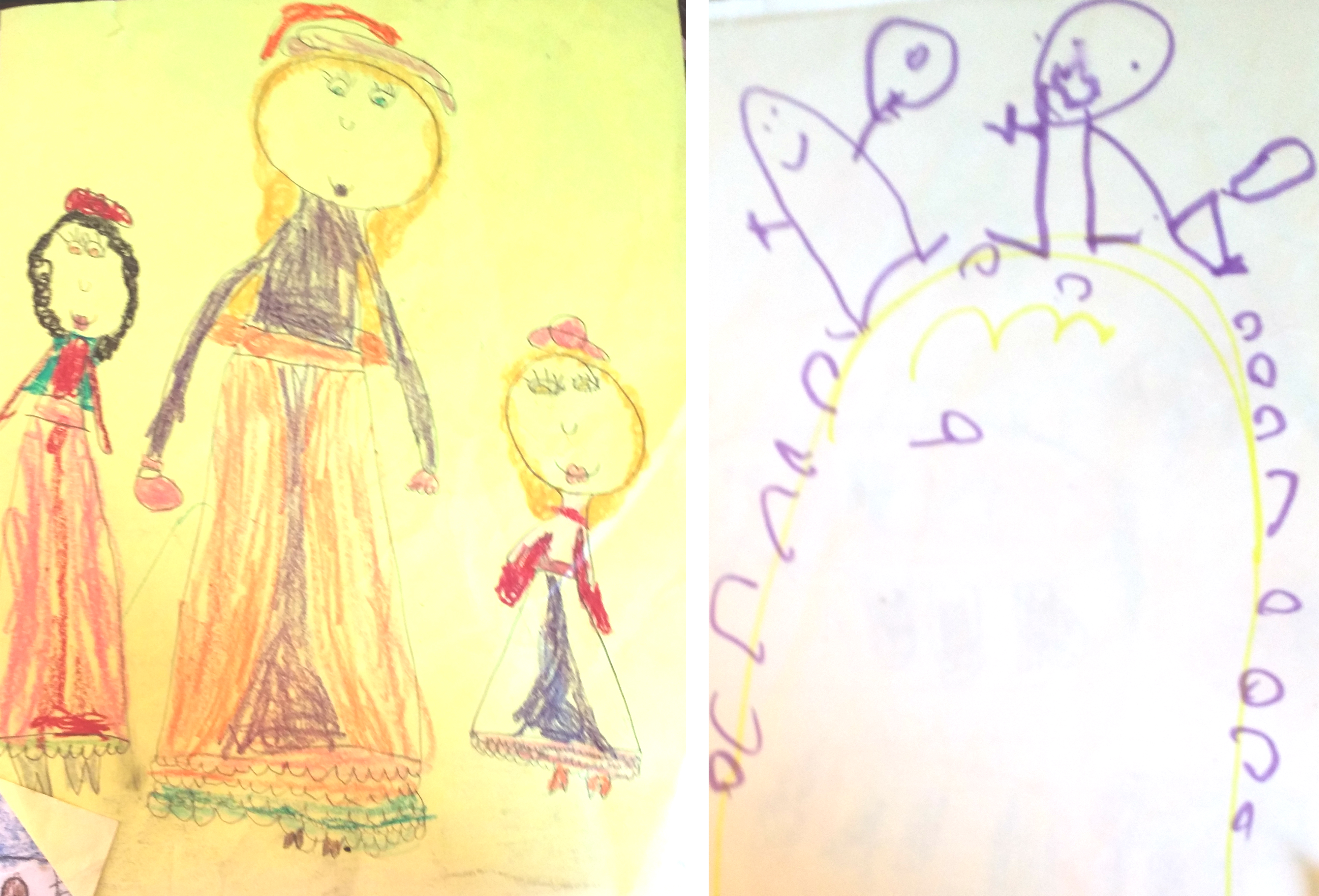
When I was about twelve years old, I began designing clothes. Before that, I drew aliens in beauty pageants, and before that, I drew women in hats. Before that, I drew potato people on hills. I also remember doing a portrait of my dad and desperately trying to remember if his mustache was above or below his nose.
Women in Hats & Potato People
Dolls & Dress-Up
I am not quite sure why I started designing clothes. We had a picture book about the history of dress. They had everything from early Mesopotamia to the Roaring Twenties. I would spend hours flipping through the drawings. I was fascinated by how sheer the Egyptian dresses were and in awe of the bare-breasted Minoan women.
My mom had taught me a basic stitch and I began making Barbie clothes, first for my dolls, then for my sisters’ when I got older. One year, for her birthday, I made a Barbie wardrobe for my younger sister, Jane, out of an old cereal box along with about ten dresses. I used rags and some of my mom’s old clothes.
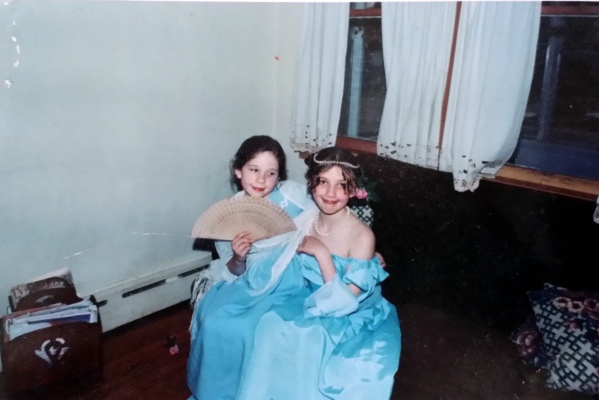
I was also just enthralled with playing dress-up. There were almost no games I played as a child that involved wearing my normal clothes. Part of preparing for a game was changing into the appropriate garments: gypsy, princess, fairy, 1940s Jew trying to escape the Nazis, Heidi. These often included second-hand prom dresses. For my tenth birthday, I had all my guests dress up. I went to Salvation Army with my mom and picked out a beautiful, blue dress made out of some kind of horrible synthetic fabric that I believed to be the height of decadence and sophistication. We ate Chicken Florentine and had a fainting contest, falling dramatically onto piles of pillows and blankets in our finery.
My tenth birthday party. Left to right: Heidi (childhood friend), me.
Whatever the reason for designing, I began. I was getting a little old to play dress-up, so my costumes came to life in drawings. My proportions were terrible: heads too big, bodies too thin. And drawing hands might as well have been my undoing.
It did not take long to decide I wanted to be a fashion designer. In my social circle, this was unique. The adults I knew didn’t design, and none of the girls I knew were interested either. It seemed to me, at the time, to be quite a unique aspiration. I now know that it is highly common for girls to go through such a phase. This miscomprehension resulted in my being territorial when it came to others with a shared interest. I remember despising a girl in my 8th grade math class when she told me she wanted to be a designer too. She had either never actually designed, or I hated her designs when I saw them; I don’t remember which.
I continued to design through high school, even attempting a few sewing projects with little guidance. It is one thing to know how to follow a pattern and quite another to try to teach someone how to bring her imagination to life. My informal instruction lacked inspiration, to say the least, and I found the speed of sewing machines stressful compared to the calming, therapeutic process of sewing by hand.
A Theology of Fashion
Despite my frustrations about apparel construction itself, I began to develop a framework of beliefs about clothing. I found plenty of opposition to my interests at my church, where women were supposed to be simultaneously beautiful at all times and never put effort into their appearance (loving Jesus makes you beautiful, not makeup). There were plenty of Bible verses that supported this aversion, not the least of which can be found in Jesus’ Sermon on the Mount: “28′So why do you worry about clothing? Consider the lilies of the field, how they grow: they neither toil nor spin; 29and yet I say to you that even Solomon in all his glory was not arrayed like one of these,” (Matthew 5:28-29).
This I took as a personal challenge, despite the admonishment against worry (and seemingly of taking an interest in clothing); I dreamed of designing something as beautiful as the lilies of the field. I even used lily of the valley for inspiration in some early designs. I figured if God created people in His image, why shouldn’t I create, too? What’s more, why shouldn’t His creation be my inspiration, even my aspiration? Where some people saw limitations, I saw liberation. My best explanation for the confusion on this subject is that some people see no difference between worry and attention, because they have learned only to pay attention to that which worries them.
I kept designing and began collecting bridal magazines. Once, while flipping through one and explaining my love of clothing to a woman from church, I pointed out a model and commented on how beautiful she was. The woman from church looked at me as though with pity. She smiled and said, “You know, you’re beautiful, too,” with just a little too much encouragement in her voice. I was annoyed that she assumed I thought I wasn’t pretty just because I thought a model in a magazine was. As it happened, I didn’t really care if I was pretty just then. I cared about the clothes being made all the more beautiful by the person who wore them. She was captivating in the flowing, white dress and blue sash. Her blonde hair and large, brown eyes displayed a kindness and a joy I rarely saw in the other photos. She looked like she could actually be a bride.
Other women from church told me what to design: more modest clothing; more functional clothing; more clothes for teens. For some reason, these church ladies all seemed to be under the impression that it was impossible to find clothes that would adequately cover their bodies and still be flattering (but not too flattering). I have never understood this. I have read so many Christian articles about how horrible fashion trends are and how impossible it is to find clothes that are appropriate for teenage girls or women. This has never been my experience, not once. I have always been able to find suitable clothing for my desired level of body coverage (I may dress boldly, but I don’t often show a lot of skin).
I would later learn that in the broader culture, many of the same objections to my interest in fashion and dress would arise, but couched in non-religious language. Women who invested in their appearance were shallow or bitchy (rather than vain). They were easy or slutty (rather than lacking in purity). But the message was the same: if you’re a woman, your body is bad, so your fascination with what covers (or fails to cover) your body is also bad.
I instinctively took issue with problematizing women’s bodies, but continued to focus on becoming a better designer.
There are some people who should not go unnoticed here, people who encouraged my love of clothing, people who saw passion as an asset and creativity as a gift. They live in a big universe, and they invited me into it. Those people have my undying gratitude and love.
University, Fashion, and Philosophy
When I took my first fashion courses in college, I was very disappointed. I had hoped for something spectacular, but found myself disliking my classmates and even some of my professors—I have rarely disliked any of my teachers; I have been less kind to my classmates. There was no spark, no setting of lofty goals, only fractions and vocabulary terms. When anyone did attempt to grapple with the abstract fundamentals of dress, they used vague vocabulary often borrowed from sociology and psychology, assigning articles written on the subject at least 80 years prior. Still, I willed myself forward, despite being unsure whether my professors even wanted me in the program or thought I had any talent whatsoever.
In the spring of my sophomore year, I took a course in logic, intending to obtain a minor in philosophy. I had enjoyed my first philosophy class so much that I decided I would enjoy another 25 credits of it.
My logic professor was a charismatic, sharply dressed enigma. He was known throughout campus for his Prada suits and bold style. He had flair, dressing better than any of my fashion professors.
He told us all on the first day of class that he loved us. I believed him.
On the third day of class, he asked me to stay after. In the hallway, away from the other students waiting to ask him questions about the homework, he told me that he had rarely had a student with my intelligence. He told me that some simple comment I had made during class picked up on a nuance that he did not think even the textbook’s author had intended. I am sure I blushed. Then, after I told him he was third professor that year to try to get me to change my major, he asked me to consider double majoring in philosophy. I don’t know that I believed his compliments, but I did start thinking about it. I couldn’t help it.
As I became more engaged in my philosophy courses, my dissatisfaction in my fashion courses became increasingly apparent. My list of complaints got longer and longer. That spark that I couldn’t find in fashion classes; it was in my philosophy classes. In fashion, my mind felt numbed, stifled. In philosophy, my mind was alive, growing. In fashion, I felt creatively, intellectually, and relationally bored. No one talked about how to design well. They reinforced the cultural stereotypes of vapidity and self-involvement. I felt that I could not relate to the other students. At the time, I thought they lacked intelligence, which may have been true for many of them, but what the program lacked—and thereby its students—was gravitas.
Added to all of this, my stylish logic professor would talk to me about design. He was intrigued by my use of color and liked to talk about predicting trends. It wasn’t fashion itself that was the problem; it seemed to be the people.
By the end of that quarter I had declared myself a double major, intent on finding a way to combine my two passions and excited to have a major that wouldn’t make guys treat me like a bimbo. There was a marked difference in people’s reaction to me when I said I was majoring in philosophy and fashion, instead of just fashion.
By the end of the next year, I had dropped fashion as a major and decided to minor in it. I could no longer pretend to be enjoying myself. I still had a couple required courses, but I was done; not done with fashion, never done with fashion. I was done with the program, the people who lived in small worlds, a professor who publicly shamed me when I came to class without makeup one day, insisting that we talk in the hall while all my classmates gawked. This was not the universe I had imagined. Lacking the influence and authority to affect any change, I needed to get out.
So I left it for costuming—taking all the tools I gleaned from fashion classes with me (which turned out to be a great deal more than I had realized). By the time I graduated, two theaters had offered me contracts for their summer musicals. I ended up designing for four shows in five months. Costuming was glorious but hard work for little pay. After four years at a private university, I could not afford that life, not with student loan repayments looming ahead. So, I set out on my own, not knowing what would come next, but applying to every reception or administrative assistant position I could find, a far cry from design or philosophy.
Elements of Design
A friend of mine recently told me that I bring fashion design into everything that I touch. She had been enjoying my cooking at a dinner party I was throwing. This is, in a sense, true. Rather, I am always designing. If it is not a dress, it is a meal. If it is not a suede tailcoat, it is a book. If it is not a summer ensemble, it is a birthday party. I love to design. Design is, in its best form, a way to do more than tell a story. It is through design that you can become the story. How grand, I have often thought, would it be to create a universe. That would be wonderful. With design, I know I am not creating matter or quarks or nebulae or star clusters. I have only this corner of a vast universe. With design, I can add a layer to reality in which my imagination becomes tangible. No, we cannot design morality or matter, but we can curate them.
This is my project, my lifelong aim. I cannot merely create a budget and a line sheet or spend hours adding, subtracting, dividing, and multiplying fractions. I will do them because they are part of the process, but they are not the goal. To design, I must always do so with the intention of presenting more than commerce. I am engaging in an idea. Either that idea contributes beauty to the world, or it does not.
This search for beauty, not merely to find it but to create it, is a lofty one. It is lofty because not enough people attempt it, and even fewer attempt it more than once.
In an age of knockoffs, failing retail, diminishing haute couture, and the near extinction of home-sewing (no, DIY pictures on Pinterest do not count), it is imperative to me to continue to strive for this lofty goal, to present the world always with something beautiful.
For a long time, we have been led to believe that for some reason beauty is shallow, especially when it comes to fashion. However, I am of the opinion that bodies are not bad and that, if anything, there are people who are shallow, and cannot properly value exterior beauty due to their own lack of interior beauty. Perhaps we have allowed their voices far too much reign on the matter.
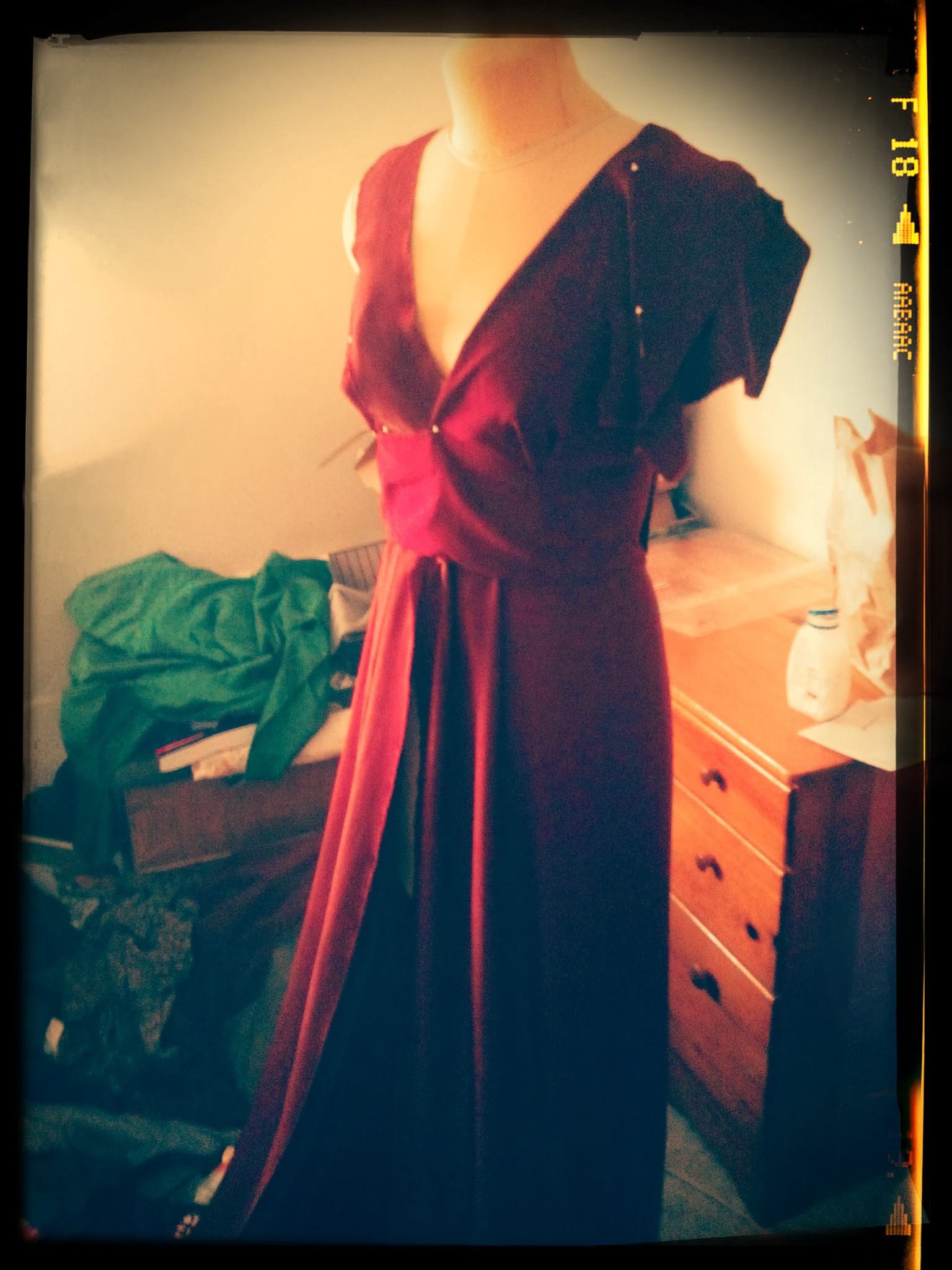
Today, I am a designer. I do not work for a clothing company. None of my designs make their way down runways or are mass-produced. In fact, most of them will never experience the incredible transformation from the page to the garment, or even reach beyond my imagination (that might be impossible in any case). However, I am a designer because right now there is a dress draped on my dress form that needs to be finished. It needs to have a chance to offer its beauty to this corner of the universe.


 An Indomitable Grace